

We are excited to introduce the Intercultural Trainer Lab, a new professional development format for intercultural trainers, facilitators, and multipliers who want to engage critically with questions of diversity, inclusion, power, privilege, and discrimination in their professional practice.
The field of intercultural learning is constantly evolving. Alongside established intercultural theories and models, it is important to explore how power structures, social inequalities, and different forms of discrimination shape learning spaces, interactions, and training design. The Intercultural Trainer Lab creates an opportunity to engage with these questions in a reflective and practice-oriented way.
The Lab is designed as a space for learning, exchange, and critical reflection. Participants are invited to explore perspectives that challenge and complement established approaches in the intercultural field while reflecting on their own role as trainers and facilitators.
A central element of the programme is the willingness to engage in self-reflection. We encourage participants to critically examine their own assumptions, experiences, social positioning, and professional practices, and to consider how these influence the learning spaces they create. Learning in the Lab takes place at the intersection of personal and professional reflection. While this process can be challenging, we aim to create a supportive, respectful, and trusting learning environment in which participants can engage with complex questions, learn from one another, and explore new perspectives.
Each edition of the Intercultural Trainer Lab focuses on specific focus topics. To explore these topics, we collaborate with trainers, practitioners, and subject-matter experts who contribute their knowledge, experience, and perspectives. While the focus topics and contributors will vary from one edition to another, the overall intention remains the same: strengthening diversity-sensitive, critically reflective, and socially conscious approaches to intercultural learning and training.
Participants who complete the programme receive a certificate of participation.
Intercultural Trainer Lab 2026/2027
Neurodiversity and Racism-Critical Perspectives in Intercultural Training
The first edition of the Intercultural Trainer Lab focuses on neurodiversity and racism and explores what role these focus topics play in interculturual training practice.
Both topics invite trainers to rethink assumptions about participation, communication, learning, inclusion, and belonging. They encourage us to examine whose perspectives are represented, how barriers emerge in learning environments, and how trainers can create learning spaces that are more inclusive, critically reflective, and responsive to diverse needs and experiences.
Neurodiversity
In this module, participants will gain a deeper understanding of neurodiversity and its relevance for training and facilitation.
Topics include:
- Understanding neurodiversity: key concepts, terminology, and common myths
- Exploring neurodivergent profiles such as autism, ADHD, dyslexia, and others
- Examining different perspectives on neurodivergence, including the medical model and the neurodiversity movement
- Designing more inclusive learning environments with regard to accessibility, predictability, communication, participation, sensory needs, and cognitive load
- Identifying barriers in learning spaces and adapting activities for neurodivergent participants through practical case work
Racism
In this module, participants will explore the role of racism in intercultural learning spaces.
Topics include:
- Exploring individual and structural dimensions of racism and their relevance for intercultural encounters
- Reflecting on how racism can shape experiences, participation, and interactions in learning environments
- Reviewing intercultural theories and concepts of culture in connection to racism
- Identifying implications for training design, facilitation, and personal professional practice
Learning Approach

The programme combines theoretical input, practical exercises, small-group work, peer exchange, and individual reflection.
Participants are expected to bring curiosity, openness, and a willingness to engage critically with the focus topics as well as their own professional practice. The programme is intended for trainers who are interested in continuous learning and who are prepared to reflect on themselves not only in their professional role, but also in relation to their own experiences, perspectives, and social positionality.
Save the dates for our upcoming Intercultural Trainer Labs
Please note: Both dates offer the identical content, modules, and trainer team. They simply differ in format (one online, one in-person) to allow participants to choose the format that best suits their learning preferences and availability.
Trainers

Vyvy is a facilitator, trainer, and project manager with a passion for empowerment work and community-building, as well as experience in international learning spaces and designing interactive workshops and trainings.
She first entered the intercultural field, because she was passioned about languages, the idea of exploring other cultures and living and working broad. While these experiences had a meaningful impact on her, she also became more critical of intercultural approaches as she reflected on her own experiences of diversity and discrimination, particularly racism, both as someone who would be affected by and perpetuate social injustices. This motivated her to center considerations of diversity and discrimination in spaces where people work, learn, and live together internationally and across cultures, privileges, and power structures.
Her work is influenced both by this journey and by her studies in Cultural Encounters and Social Psychology. During her studies, she conducted several research projects on racism and empowerment and explored theories of decolonial feminism and art-based research methods. This continues to inspire her work: she is passionate about incorporating artistic and creative approaches into training settings and places great importance on addressing racism and power relations in learning experiences.
She is currently based in Hamburg and delivers trainings in both English and German.
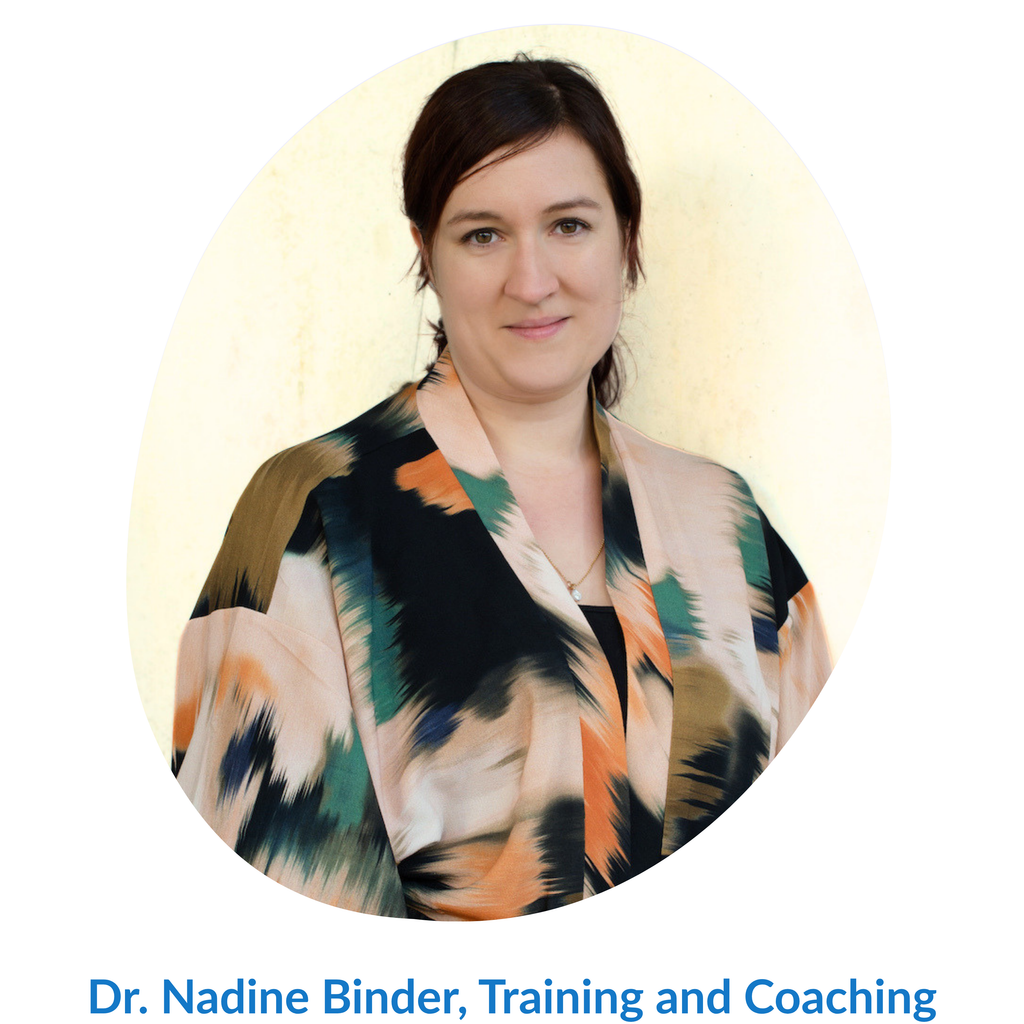
Nadine Binder is a facilitator, trainer, consultant, and certified professional Co-Active coach (CPCC, ACC), specialized in global leadership development, DEIB (Diversity, Equity, Inclusion, & Belonging), neurodiversity, interpersonal and intercultural communication, intercultural competence development, psychological and social safety, and mental health awareness. She has received her PhD in psychology for mixed-methods, longitudinal research on evidence-based design and assessment of an intercultural learning intervention.
Besides her expertise in evidence-based learning design, Nadine is specialized in experiential learning and inclusive design across face-to-face, blended, hybrid, and online formats. She is regularly facilitating train-the-trainer programs, online and in-person, for aspiring and experienced diversity and intercultural trainers. She has published both academic and practitioner-oriented articles and book chapters on global leadership, intercultural competence development and assessment, evidence-based learning design, online facilitation, and experiential learning.
In her work, Nadine seeks to create and hold inclusive spaces for her clients and participants for reflection and sharing as well as to support them in their personal growth and professional development and their ability to connect deeply and meaningfully with themselves and others.
Over the past 10+ years, Nadine has worked with a broad range of clients, including multinational corporations, SMEs, non-profit organizations, education institutions, law enforcement and judiciary, and public administration.
Besides her independent work, Nadine is a partner at the Institute for Developing Across Differences (IDD), a global organization dedicated to creating advanced learning and networking opportunities for facilitators, consultants, managers, and educators in Diversity, Equity, Inclusion, & Belonging (DEIB), intercultural communication, global competence, and global learning. She also is the co-founder and co-host of the Globally Conscious Peacemakers (GCP), a virtual global community of 500+ practitioners.
Nadine is currently based in Northern Germany, has extensive experience working across the EMEA region as well as Asia and North America and delivers her services in English and German.
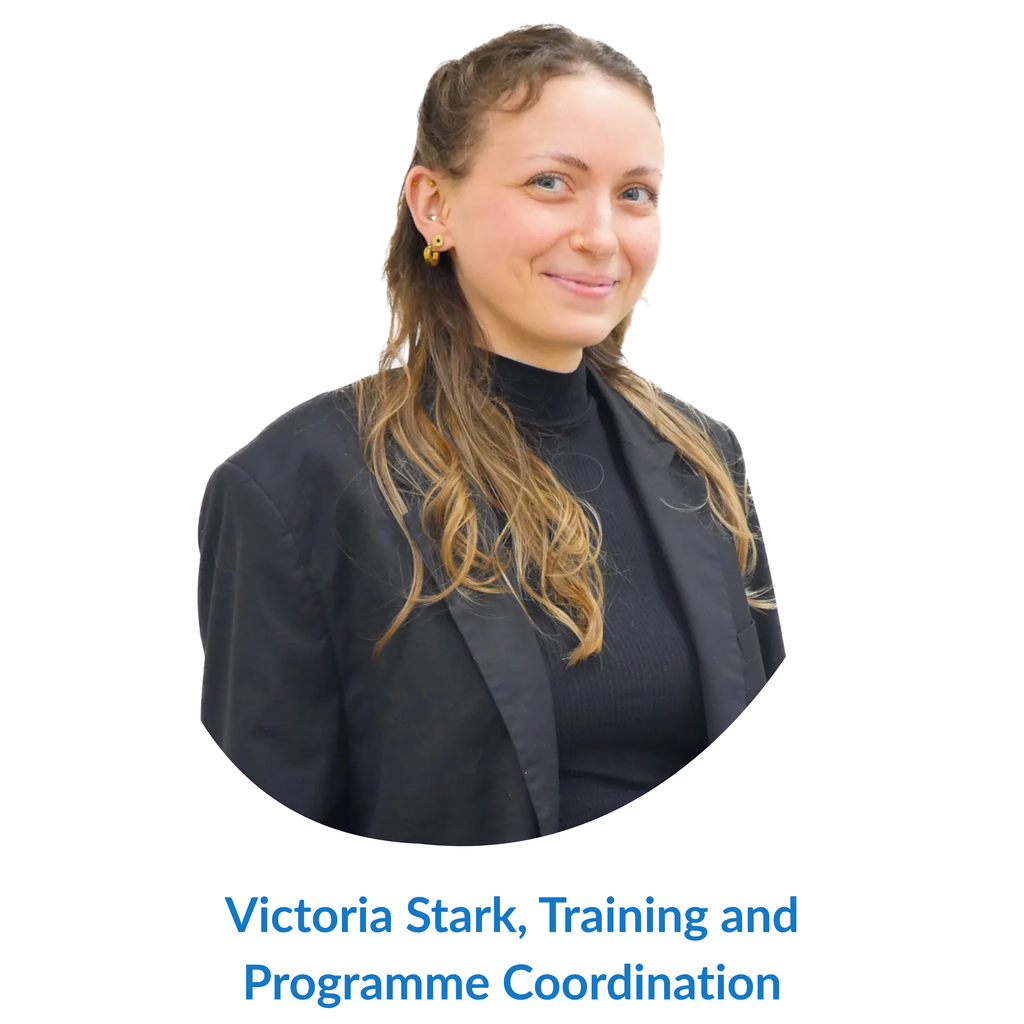
Victoria is a certified intercultural trainer with an academic background in Southeast Asian Studies (B.A.) and International Migration and Intercultural Relations (M.A.). She designs and facilitates intercultural trainings and projects, combining academic insight with practical experience.
Her work is guided by a strong interest in migration-related topics and a reflective, racism-critical perspective. She places particular emphasis on perspective-taking and strives to create learning environments that encourage openness, dialogue, and critical reflection. In addition to her professional activities, she is actively involved in volunteer initiatives that promote intercultural understanding.
She brings creativity into her training preparation and delivery, developing interactive formats. Her work is shaped by curiosity, ongoing learning, and a deep personal motivation to contribute to more inclusive and respectful social interactions.
Intercultural Trainer Lab December 2026 (Online)
Neurodiversity and Racism in Intercultural Training
Join us for the first online edition of the Intercultural Trainer Lab.
Over the course of the programme, participants will explore neurodiversity and racism-critical perspectives, deepen their reflective practice, and exchange experiences with fellow trainers from different backgrounds and contexts.
The online format combines theoretical input, interactive exercises, reflection, and peer learning in a collaborative and supportive environment.



Place:
Online
Dates:
03.12. – 06.12.2026
(3.5 Days)
Tuition costs:
Standard €890
Corporate €1,090
* Travel and accommodation are not applicable for the online edition. Please find our terms and conditions here.
Intercultural Trainer Lab April 2027 (Hamburg)
Neurodiversity and Racism in Intercultural Training
Join us in Hamburg for the in-person edition of the Intercultural Trainer Lab.
This intensive programme offers space for in-depth learning, reflection, discussion, and networking with colleagues from the intercultural field.
Through a combination of theoretical input, practical application, and facilitated reflection, participants will explore how neurodiversity and racism-critical perspectives can inform and strengthen their training practice.



Place:
Hamburg, Germany
Dates:
15.04. – 18.04.2027
(3.5 Days)
Tuition costs:
Standard €890
Corporate €1,090
* Travel and accommodation are not included in the participation fee. Please find our terms and conditions here.
All information in one – our flyer
Any questions left? Feel free to leave us a message or email: traineracademy@intercultur.de !